

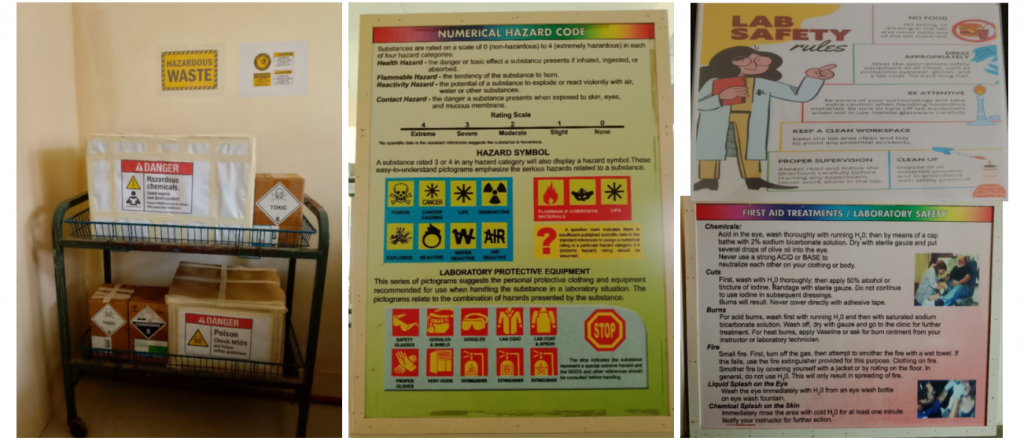
Proper hazardous waste management is essential to keeping university facilities safe and preventing harmful substances from reaching the natural environment. At Western Philippines University, laboratory chemical waste is segregated, labeled, and stored in a designated hazardous waste storage room with restricted access to prevent unauthorized handling.
A logbook records the type, quantity, and date of storage of hazardous waste, providing a basis for monitoring and traceability. Laboratory safety is further supported by posted numerical hazard codes, safety rules, and first-aid guidelines that help students and personnel recognize risks and handle hazardous substances responsibly.
To improve the management of stored waste, the university is working toward transferring hazardous materials to accredited treatment and disposal facilities in accordance with applicable environmental regulations. These practices help reduce the risk of harmful substances contaminating soil and water, where they could threaten wildlife, damage habitats, and disrupt ecological processes.
By incorporating hazardous waste management into laboratory operations, the university promotes responsible handling of potentially harmful materials and strengthens environmental safeguards across its facilities. These efforts support Sustainable Development Goal 15: Life on Land by helping prevent soil contamination and reducing potential harm to terrestrial ecosystems and biodiversity. They also contribute to SDG 3: Good Health and Well-being and SDG 12: Responsible Consumption and Production.
Continued monitoring, proper documentation, and improvement of waste handling and disposal procedures remain important to maintaining a safe campus environment and protecting surrounding natural resources.
[This article is in line with the SDGs 3, 12, & 15]