


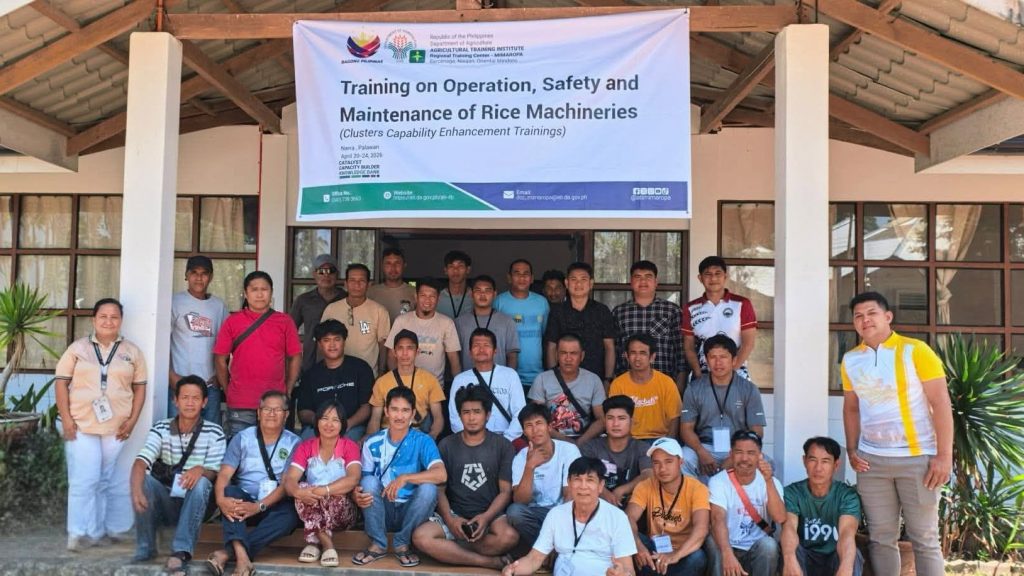
𝗡𝗮𝗿𝗿𝗮, 𝗣𝗮𝗹𝗮𝘄𝗮𝗻 — Strengthening the skills of frontline agricultural workers and farmers in rice mechanization took center stage as faculty members from the Agricultural and Biosystems Engineering (ABE) program of Western Philippines University (WPU) served as resource speakers and coordinators in a five-day training held from April 20–24, 2026, at Crystal Paradise Resort in Narra, Palawan.
The “𝗧𝗿𝗮𝗶𝗻𝗶𝗻𝗴 𝗼𝗻 𝗢𝗽𝗲𝗿𝗮𝘁𝗶𝗼𝗻, 𝗦𝗮𝗳𝗲𝘁𝘆, 𝗮𝗻𝗱 𝗠𝗮𝗶𝗻𝘁𝗲𝗻𝗮𝗻𝗰𝗲 𝗼𝗳 𝗥𝗶𝗰𝗲 𝗠𝗮𝗰𝗵𝗶𝗻𝗲𝗿𝗶𝗲𝘀 (𝗖𝗹𝘂𝘀𝘁𝗲𝗿𝘀 𝗖𝗮𝗽𝗮𝗯𝗶𝗹𝗶𝘁𝘆 𝗘𝗻𝗵𝗮𝗻𝗰𝗲𝗺𝗲𝗻𝘁 𝗧𝗿𝗮𝗶𝗻𝗶𝗻𝗴𝘀)” gathered 30 farmer-participants, equipping them with essential technical knowledge and hands-on experience in handling modern rice production equipment. The activity was organized and funded by the Agricultural Training Institute (ATI) – Regional Training Center IV-B (MIMAROPA).
The training initiative was anchored on the need to enhance mechanization in the MIMAROPA region, a significant rice-producing area that generated approximately 631,469 metric tons of palay from October to December 2025 (PSA, 2026). Despite this contribution, mechanization levels remain relatively low at about 2.38 horsepower per hectare (DA-PHilMech, 2025), highlighting the need for improved technical capacity among farmers and Agricultural Extension Workers (AEWs).
Through a combination of lectures and practical exercises, the training aimed to bridge knowledge gaps in machinery operation, safety, and maintenance. It emphasized the importance of proper equipment use in reducing labor costs, minimizing postharvest losses, and improving overall farm productivity.
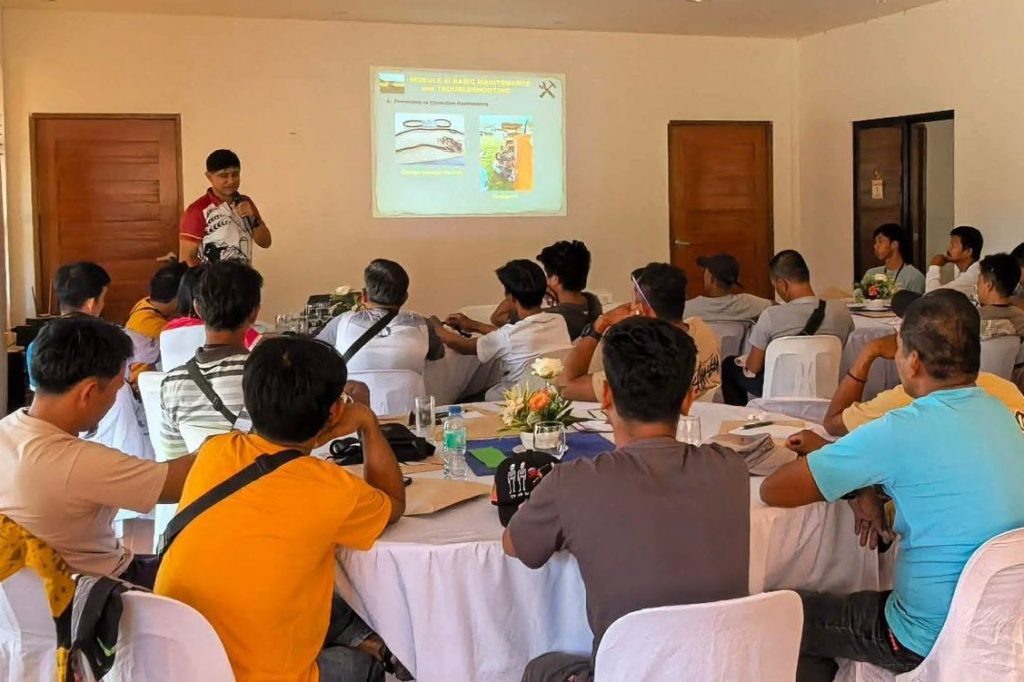
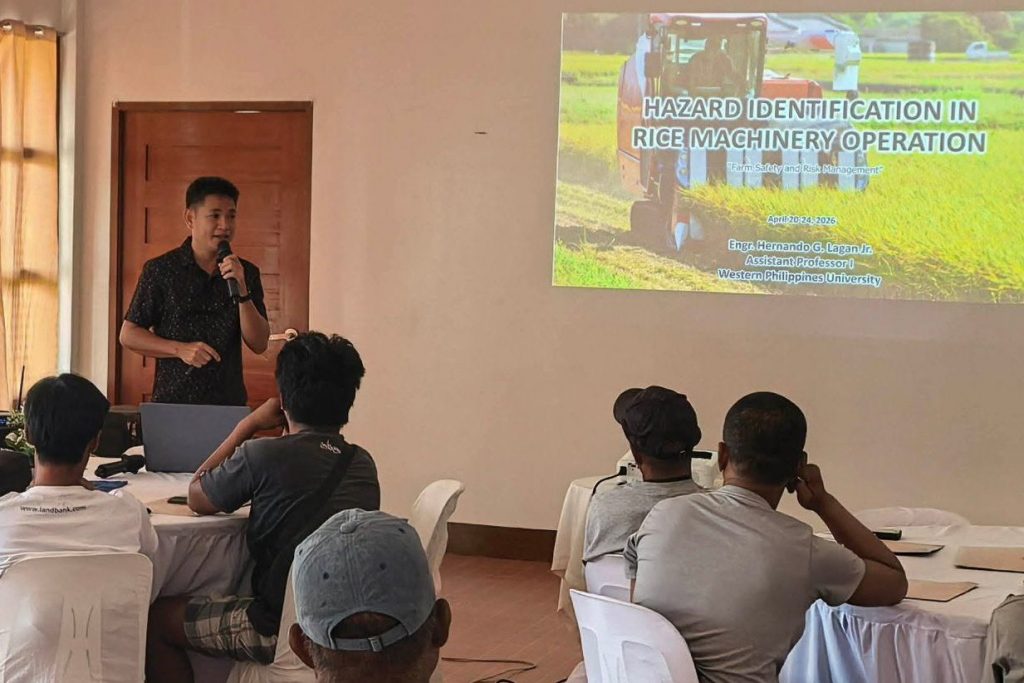
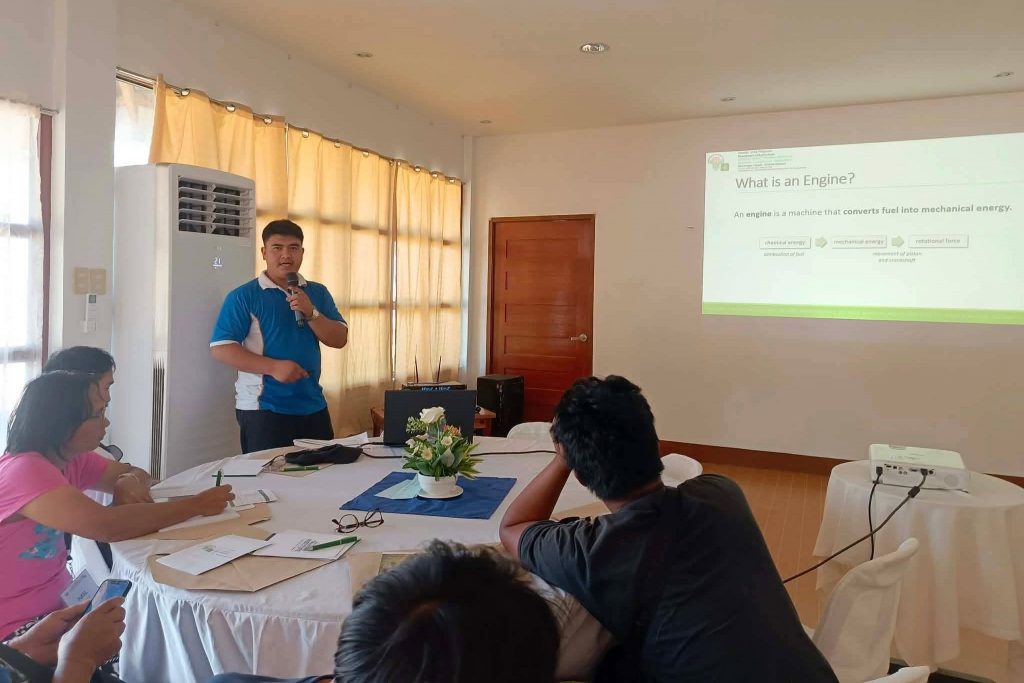
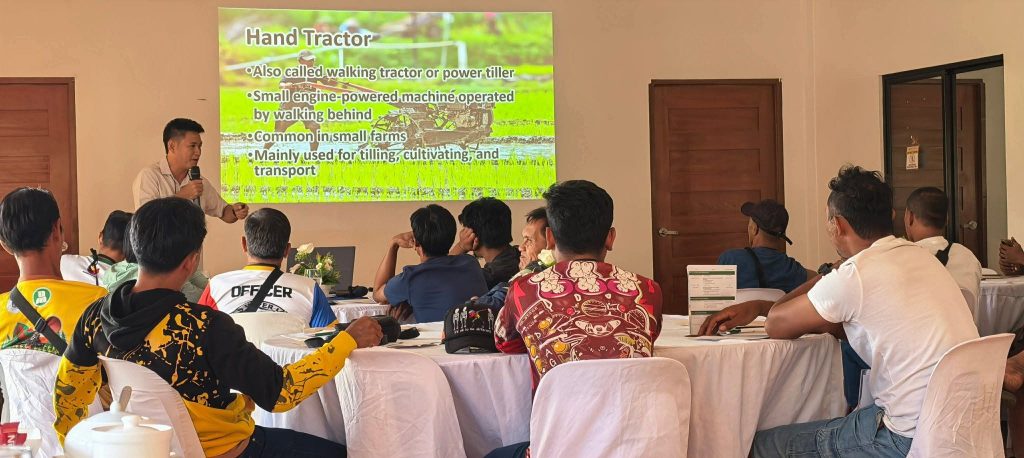
Engr. Vincent S. Dangan discussed the overview of rice farm mechanization, including its role in enhancing productivity and the current status of mechanization in the region. Engr. Hernando G. Lagan Jr. introduced participants to various rice machineries and led sessions on occupational safety and health practices, focusing on hazard identification, proper use of personal protective equipment (PPE), and emergency procedures.
Meanwhile, Engr. Josue L. Peneyra handled modules on maintenance, troubleshooting, and machine operation, guiding participants through preventive maintenance routines and standard operating procedures. The sessions provided participants with the skills to diagnose common machine issues and apply appropriate corrective measures.
Hands-on activities were a key component of the training, allowing participants to operate a four-wheel tractor and a rice combine harvester under guided supervision. This practical exposure reinforced theoretical concepts and built confidence among participants in using farm machinery. Engr. Cherrylene Lagan served as coordinator, ensuring the smooth delivery of topics and other activities.
The training was designed with a clear objective: to enhance participants’ competencies in operating, maintaining, and safely handling rice machineries, enabling them to effectively support and promote mechanization in their respective communities.
By the end of the program, participants were able to understand the role of mechanization in rice production, identify different types and components of machinery, perform pre-operation inspections, apply safety protocols, and conduct routine maintenance and troubleshooting.
The initiative supports Sustainable Development Goal 2 (Zero Hunger) by improving agricultural productivity, SDG 8 (Decent Work and Economic Growth) through skills development, and SDG 12 (Responsible Consumption and Production) by promoting efficient and sustainable farming practices.
(Contributor: Engr. Danny C. Abrina)
[This article is in line with the SDGs 1, 2, 4, 8, 9, 12, & 17]