


Marine Biodiversity Conservation and Ecosystem Restoration
Western Philippines University (WPU) continues to contribute to marine biodiversity conservation through its long-standing partnership with Malampaya Foundation Inc. (MFI) under the String of Pearls Project, a collaborative conservation initiative dedicated to restoring threatened marine species and supporting the ecological rehabilitation of marine protected areas in Palawan.
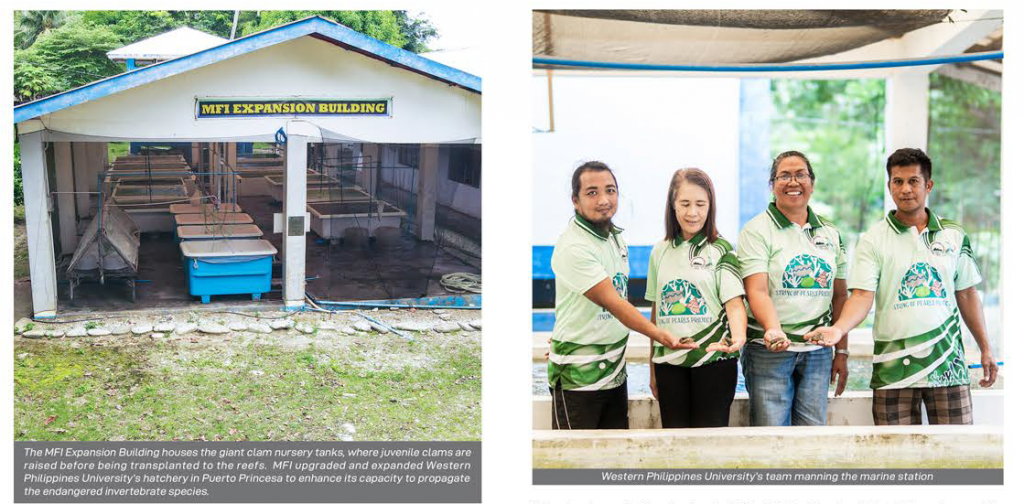
The project focuses on the propagation and restocking of native marine invertebrates, particularly the Philippine-native giant clam, Tridacna gigas, a species once believed to be locally extinct in Philippine waters. Through hatchery breeding, juvenile rearing, and the reintroduction of giant clams into protected marine habitats, the initiative seeks to rebuild depleted populations and conserve the species’ remaining native genetic resources.
Bringing Marine Science into Conservation Action
WPU plays an important technical role through its hatchery and marine station in Binduyan, Puerto Princesa City, where researchers undertake the propagation and rearing of giant clams, abalone, and topshells intended for marine resource restoration.
WPU successfully produced 8,050 abalone juveniles, 955 topshell juveniles, 2,750 Tridacna gigas juveniles, and 3,304 Tridacna squamosa juveniles during the reporting year.
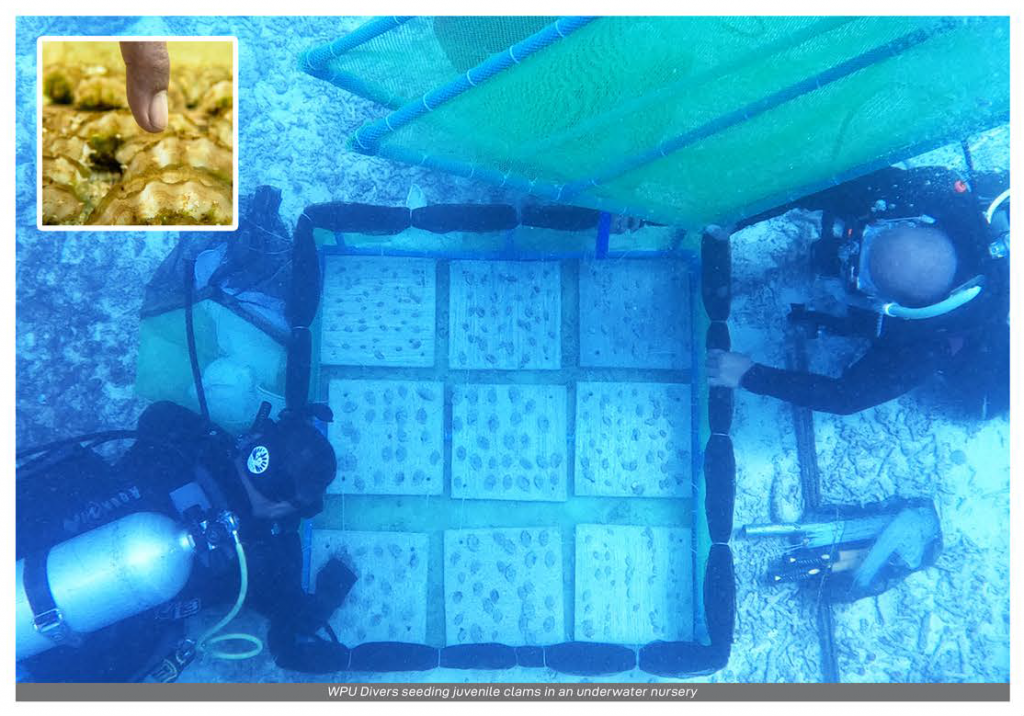
By the end of 2024, the String of Pearls Project had also documented the transfer of 76 Tridacna gigas and 91 Tridacna squamosa subadult clams from rearing cages to open reefs within marine protected areas in Taytay, El Nido, and Coron, Palawan.
These conservation efforts represent important progress in reintroducing native giant clams into their natural habitats and establishing potential breeding populations for future generations.
The partnership continued to report conservation outputs in 2025. In its 2025 Chairman’s Report, MFI documented support for the production of 3,050 Tridacna gigas juveniles through the String of Pearls Project with WPU, demonstrating the continuing contribution of university-based hatchery research to marine conservation.
Strengthening Partnerships for Marine Ecosystem Protection
The initiative demonstrates the importance of collaboration among academic institutions, government agencies, conservation organizations, and coastal communities in addressing marine biodiversity loss.
Alongside WPU and MFI, the wider conservation partnership has involved Palawan State University (PSU), the Bureau of Fisheries and Aquatic Resources (BFAR), the Department of Environment and Natural Resources (DENR), and the Palawan Council for Sustainable Development (PCSD). The University of the Philippines Marine Science Institute (UP MSI) has also provided technical expertise in giant clam propagation.
These partnerships support science-based conservation, strengthened management of marine protected areas, and the restoration of marine species affected by overharvesting and environmental pressures.
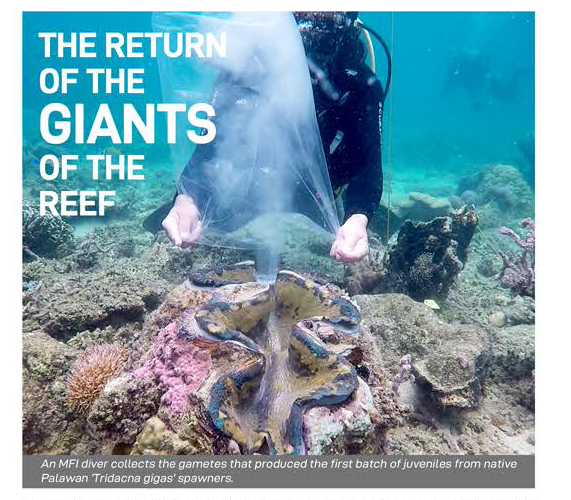
Beyond the production of juvenile marine organisms, the initiative highlights how university research can be translated into practical conservation action through collaboration with institutions and communities responsible for protecting coastal resources.
Through continued research, technical expertise, and institutional partnerships, Western Philippines University reinforces its role as a strong partner for sustainable development, contributing to efforts to restore marine biodiversity and safeguard Palawan’s coastal ecosystems for future generations.
[This article is in line with the SDGs 13, 14 & 17]
Sources and Institutional References:
Malampaya Foundation Inc. (MFI). 2024 Annual Report, pp. 17–18. String of Pearls Project: Marine biodiversity restoration and hatchery production.
Malampaya Foundation Inc. (2026). 2025 Chairman’s Report. Marine Biodiversity Conservation.
Palawan Council for Sustainable Development (PCSD). Malampaya Foundation Spawns Native, Biggest Giant Clam, June 10, 2019.
Malampaya Foundation Inc. Adopt-A-Shell Launched by WPU, MFI, December 16, 2020.