


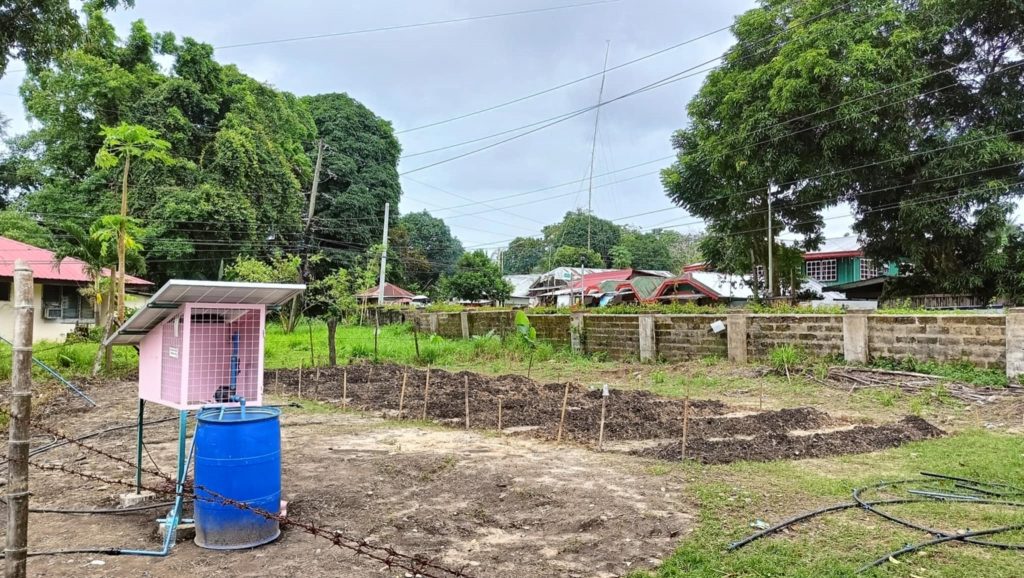
Western Philippines University continues to promote environmental sustainability through water management initiatives that support the responsible use and protection of water resources. By integrating water conservation, rainwater harvesting, water treatment, and efficient irrigation into campus operations, the university contributes to safeguarding natural resources and supporting the health of surrounding ecosystems.
One of the university’s initiatives is its cistern tank system, which collects and treats rainwater for recycling and potential use as an additional source of potable water. This system helps maximize available water resources while emphasizing the importance of water treatment and responsible water use. Rainwater harvesting is also practiced by the College of Engineering and Technology, which repurposed recycled PVC drums to collect water for non-potable purposes such as floor cleaning, plant watering, and toilet flushing.
The university also maintains a campus lake connected to a running water system. Managed by university personnel, the lake supports agricultural activities and provides opportunities for students to conduct academic exercises and research related to water resources, environmental science, and natural resource management. These uses help strengthen awareness of water stewardship and the importance of maintaining campus water resources.
In support of sustainable agriculture, the university operates a water impoundment system complemented by irrigation and drainage canals. These facilities help capture, store, and distribute water for agricultural production while managing water flow and reducing unnecessary losses. The installation of drip irrigation for vegetable production further improves water-use efficiency by delivering water directly to plants. Slow-flow faucets installed across campus buildings also help reduce daily water consumption.
Together, these initiatives demonstrate the university’s efforts to incorporate water conservation, treatment, reuse, and efficient distribution into its environmental management practices. Responsible management of water resources supports not only campus operations and agricultural productivity but also the broader goal of protecting natural habitats and reducing pressure on the environment.
[This article is in line with the SDGs 3, 6 & 15]